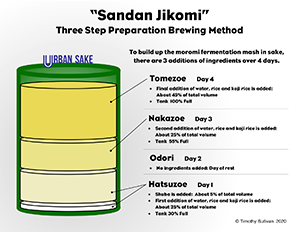
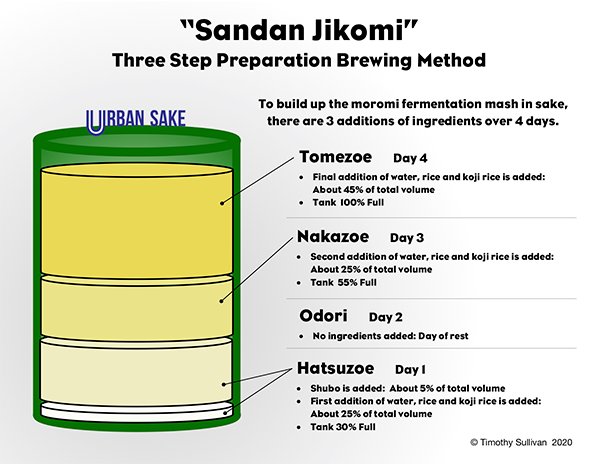
 Sandan Jikomi referrers to “three step preparation” brewing method, the practice of adding three additions of ingredients to the main moromi tank, over the first four days of the moromi fermentation period.
The steps of Sandan Jikomi are as follows:
Hatsuzoe:
In the sake production process, hatsuzoe is day one of building the Moromi mash. It is the first addition of ingredients on the first day of the moromi main mash fermentation period. First, the Shubo is added to the tank. This is a fermentation starter that contains all the yeast for the moromi tank and it takes up about 5% of the tank. In addition to the shubo, brewers add the first addition of water, sake rice (kakemai) and koji rice (kojimai). This ingredients addition takes up about 25% of the tank. At the end of the day one Hatsuzoe process, with the shubo and other ingredients together, the moromi tank would be about 30% full.
Odori:
Odori is the second day of building the moromi mash. Odori literally means “dance” and it is the name of the second day of the four day “Sandan Jikomi” process of building up the main moromi mash in sake production. On this second day, there are no additions of ingredients to the mash. The additions from day 1 are left to rest and usually gets stirred as well. During the odori stage, the yeast in the mash will propagate and fill out more of the tank before moving on to the subsequent additions of ingredients.
Why do they call it Odori/dance? There are two ideas as to why they call this step “dance”. As stated above there are no additions of any ingredients on day two, so perhaps the brewers have free time to go dancing. An alternate explanation is that as the yeast in the mash get active, the the moromi starts to actively bubble, causing the surface to “dance”. Since there are no additions, the moromi tank remains about 30% full.
Nakazoe:
Nakazoe is the third day of building the moromi mash. It is the second addition of ingredients on the third day of the moromi main mash fermentation period. Brewers add this second addition of water, sake rice (kakemai) and koji rice (kojimai). This ingredient addition takes up about 25% of the tank. At the end of the day three Nakazoe process, the moromi tank would be about 55% full.
Tomozoe:
Tomezoe is the fourth day of building the moromi mash. It is the third and final addition of ingredients on the fourth day of the moromi main mash fermentation period. Brewers add this third addition of water, sake rice (kakemai) and koji rice (kojimai). This ingredient addition takes up about 45% of the tank. At the end of the day four tomezoe process, the moromi tank would be 100% full.
Also See Related Terms:
• Hatsuzoe
• Odori
• Nakazoe
• Tomezoe
View our Sandan Jikomi Chart: